Low Sodium High Stakes: Back to Basics of Hyponatremia in Cirrhosis

By the end of this article, the reader should be able to:
- Explain the basic pathophysiology of hyponatremia in cirrhosis
- Interpret laboratory findings and develop a differential diagnosis for hyponatremia in a patient with cirrhosis
- Describe the principles of hyponatremia management in acute and chronic cases
- Recognize complications of hyponatremia and the prognostic significance
Hyponatremia, defined as a serum sodium level below 135 mEq/L, is common in patients with cirrhosis and ascites. The key problem is not simply low sodium, but excess water retention. In advanced cirrhosis, portal hypertension leads to release of vasodilators such as nitric oxide and prostaglandins. These cause splanchnic vasodilation, which lowers the effective arterial blood volume. Although total body fluid is increased, the kidneys sense underfilling and respond as if the patient is hypovolemic.
This perceived underfilling activates three major systems: the renin-angiotensin-aldosterone system (RAAS), the sympathetic nervous system, and non-osmotic release of antidiuretic hormone (ADH). RAAS activation increases sodium and water reabsorption through aldosterone, which contributes to ascites and fluid retention. Sympathetic nervous system activation causes renal vasoconstriction and further promotes sodium retention, worsening arterial underfilling and kidney hypoperfusion. ADH causes the kidneys to retain free water, which dilutes the serum sodium and leads to hyponatremia. Additional contributors in cirrhosis include diuretic use (renal sodium loss and volume depletion), hypoalbuminemia (reduced oncotic pressure causing intravascular underfilling), and cirrhotic cardiomyopathy (impaired cardiac compensation worsening effective arterial underfilling).
Evaluation of hyponatremia in cirrhosis, as in any patient, should start with measuring serum osmolality to exclude non-hypotonic etiologies of hyponatremia. (Figure 1)
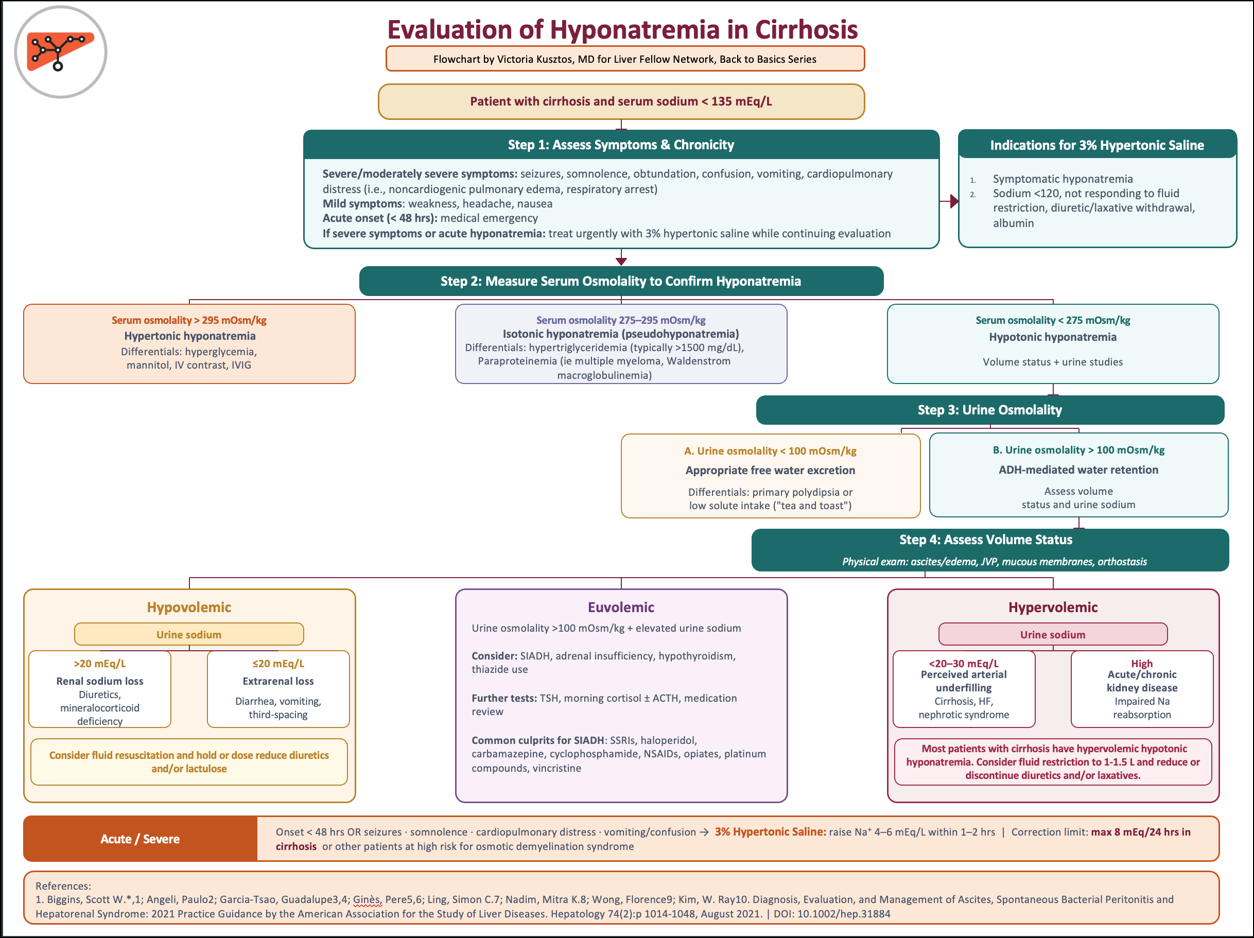
Figure 1
Hypertonic hyponatremia (serum osmolality >295 mOsm/kg) may be caused by hyperglycemia, mannitol, or contrast exposure wherein sodium is diluted by osmotic water shifts. Isotonic hyponatremia, also known as pseudohyponatremia (serum osmolality 275-295 mOsm/kg) may be caused by hypertriglyceridemia or paraproteinemia. True hyponatremia is confirmed by serum osmolality <275 mOsm/kg and can be categorized as mild (126‐135 mEq/L), moderate (120‐125 mEq/L), and severe (<120 mEq/L). The volume status examination should include careful inspection for ascites, jugular venous distention, and mucous membranes to further classify patients as hypervolemic, euvolemic, or hypovolemic hyponatremia. (Figure 1)
Urine studies including urine osmolality and urine sodium further refine the differential. Urine osmolality <100 mOsm/kg indicates appropriate free water excretion and lack of ADH activity, as seen in primary polydipsia or poor solute intake (“tea and toast” diet). Urine osmolality in hypotonic hyponatremia is more commonly >100 mOsm/kg, indicating ADH-mediated water retention and inappropriately concentrated urine.
In the hypovolemic patient, urine sodium differentiates renal from extrarenal losses. Urine sodium >20 mEq/L indicates renal losses (i.e. diuretic use or mineralocorticoid deficiency) while urine sodium ≤ 20 mEq/L indicates extrarenal losses (i.e. diarrhea, vomiting, or third-spacing).
In the hypervolemic patient, low urine sodium (<20-30 mEq/L) indicates a renal response to perceived arterial underfilling, which can be seen in cirrhosis, heart failure, and nephrotic syndrome. High urine sodium in the hypervolemic patient indicates acute or chronic renal disease, where the kidneys do not appropriately reabsorb sodium despite arterial underfilling.
Lastly, in the euvolemic patient with urine osmolality >100 mOsm/L, elevated urine sodium can be caused by adrenal insufficiency, hypothyroidism, and syndrome of inappropriate ADH release (SIADH). Therefore, further evaluation in euvolemic patients can include thyroid stimulating hormone, morning cortisol, serum ACTH, and review of the medication list for hydrochlorothiazide or culprits of SIADH such as selective serotonin reuptake inhibitors or cytotoxic chemotherapy agents.
Management of hyponatremia in a patient with cirrhosis should start with evaluation for symptoms and chronicity, which can be defined as acute (onset within 48 hours) versus chronic. Acute hyponatremia is less common in cirrhosis and carries a high risk of cerebral edema. Treatment of acute hyponatremia or any hyponatremia with severe manifestations (i.e. seizures, somnolence, cardiopulmonary distress) or moderate manifestations (i.e. vomiting, confusion) in high-risk patients involves the use of 3% sodium chloride, or hypertonic saline, with the goal of increasing serum sodium by 4-6 mEq/L within 1-2 hours.
Chronic hyponatremia management in cirrhosis is guided by volume status (Figure 1). Patients with suspected hypovolemic hyponatremia should be receive fluid resuscitation with lactated Ringer’s or 5% IV albumin and have their diuretic and/or laxative therapy held or reduced. Common causes include diarrhea from lactulose or excess diuretic therapy. Conversely, hypervolemic hyponatremia is treated with fluid restriction to 1 to 1.5 liters, reduction or discontinuation of diuretics and laxatives, and if no response is seen, consideration of albumin or vasopressin receptor antagonists (vaptans). Vaptans work by blocking the action of ADH at receptors, which increases water excretion to raise serum sodium levels. However, their effects are transient and hyponatremia may recur with drug discontinuation. They should therefore be used cautiously and for short durations, for example, in liver transplant candidates requiring correction of hyponatremia prior to surgery.
Patients with cirrhosis are considered a “high-risk” group for osmotic demyelination syndrome (ODS). The increased ODS risk in cirrhosis results from disrupted astrocyte metabolism secondary to impaired liver function, which decreases the ability to respond appropriately to osmotic changes. Additionally, chronic hyponatremia is highly prevalent in cirrhotic patients, and the longer hyponatremia is present, the greater the osmolyte depletion and risk of ODS. Common comorbidities of cirrhosis including alcohol use disorder, potassium depletion, and malnutrition convey additional risk. Patients at high risk for ODS have a lower goal correction of 4-6 mEq/L per day, not to exceed 8mEq per 24-hour period, as opposed to 4-8 mEq/L per day, not to exceed 10 to 12 mEq/day in patients at average risk of ODS.
Similar to congestive heart failure, hyponatremia in cirrhosis is a surrogate for disease severity and portends a poor prognosis. Patients with cirrhosis and hyponatremia are at significantly increased risk of complications including hepatorenal syndrome and spontaneous bacterial peritonitis. Patients with cirrhosis and hyponatremia also more than threefold higher odds of experiencing hepatic encephalopathy, which is thought to be due in part to chronic hypo-osmolality contributing to low-grade cerebral edema, which lowers the threshold for hepatic encephalopathy. (Figure 2)
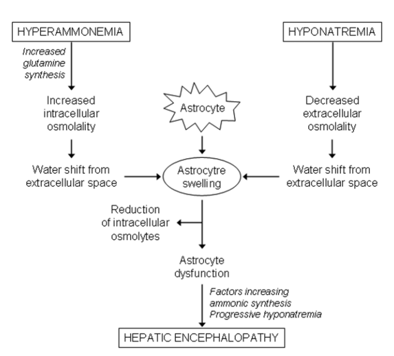
Figure 2. Pere Ginès, Manuel Guevara. Hyponatremia in cirrhosis: Pathogenesis, clinical significance, and management. American Association for the Study of Liver Diseases journal Hepatology. 2008 Sep;48(3):1002-1010. doi:10.1002/hep.22418. PMID: 18752395.
A landmark study by Kim et al. found that hyponatremia was an independent predictor of both waitlist and in-hospital mortality. Patients with moderate MELD scores with significant hyponatremia had a mortality risk equivalent to higher MELD scores and could have up to 13 points added to their MELD score, which is why sodium was incorporated into the MELD-Na score for liver transplant allocation.
Take Home Points:
1. Hyponatremia is common in patients with cirrhosis and ascites, and stems from splanchnic vasodilation, which lowers effective arterial blood volume and triggers the RAAS system, sympathetic nervous system, and non-osmotic release of ADH.
2. Assessment of hyponatremia should include evaluation of chronicity, symptoms, and volume status. In patients with cirrhosis, evaluate for common causes of hypovolemia such as diuretic use, lactulose use, or recent large volume paracentesis.
3. Patients with cirrhosis are considered high risk for osmotic demyelination syndrome, and comorbid alcohol use disorder, potassium depletion, and malnutrition convey additional risk. Goal correction is reduced from 4-8 mEq/L per day to 4-6 mEq/L per day.
4. Hyponatremia is a poor prognostic marker in cirrhosis and has been incorporated into the MELD-Na score. Hyponatremia is associated with higher rates of complications such as hepatic encephalopathy, spontaneous bacterial peritonitis, and hepatorenal syndrome.
Written by:
Victoria Kusztos, M.D.
Internal Medicine Resident at Mayo Clinic, Rochester
Reviewed by:
Vinay Jahagirdar, M.D. (Fellow Lead)
Bilal Khalid, M.D. (Faculty Editor)