Evolution of the MELD Scores

Learning Objectives
- Review markers for disease severity and prognosis in patients with advanced liver disease
- Understand the evolution of prediction models for transplant allocation
- Highlight exceptions to the MELD scoring system
- Identify appropriate indications for liver transplant referral
Why does liver disease severity and prognosis matter?
Cirrhosis is associated with significant morbidity and mortality, with outcomes varying according to disease severity. Liver transplantation is the definitive treatment for eligible patients with end-stage liver disease. Accurate assessment of short-term mortality risk is important for timely referral of patients with advanced liver disease for transplant evaluation.
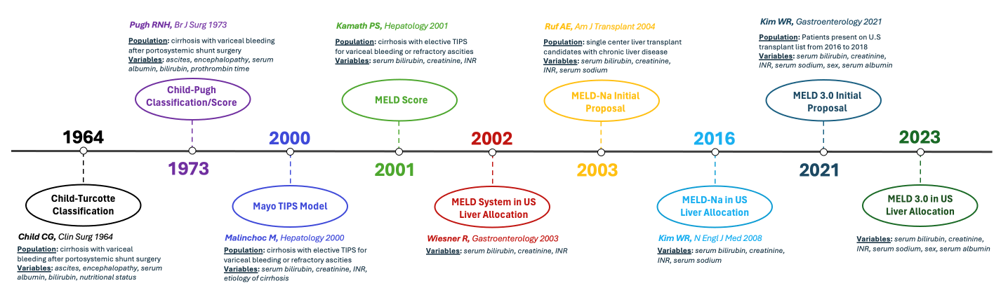
Figure 1: Evolution of Prognostication for Advanced Liver Disease (adapted from Ruf A et al, Annals of Hepatology 2022)
The Child-Turcotte-Pugh Classification
The Child–Turcotte score was originally developed to stratify the risk of patients with chronic liver disease undergoing portocaval shunt surgery for relief of portal hypertension. The application of this classification was broadened, and it became the first widely used classification system for measuring disease severity in patients with cirrhosis. It stratified patients into three risk categories using five proposed parameters, including laboratory markers (serum albumin, serum bilirubin) and subjective markers (ascites, encephalopathy, nutritional status) (Table 1). This initial scoring system was improved upon by Dr. R.N.M. Pugh (from King’s College Hospital) who removed nutritional status as a prediction marker in favor of prothrombin time, which was a more objective measurement for disease severity (Figure 1). This modification became the Child-Turcotte-Pugh (CTP) classification. The CTP score was validated to predict short-term prognosis in patients with cirrhosis and was used for liver transplant allocation in the U.S. starting in 1998.
Table 1. Overview of Scoring Systems for Estimating Prognosis
| Score | Variables | Range / Classes |
|---|---|---|
| Child-Turcotte | Bilirubin; Albumin; Ascites; Nutritional status; Encephalopathy | A, B, C |
| Child-Pugh | Bilirubin; Albumin; Ascites; PT/INR; Encephalopathy | A: 5 – 6; B: 7 – 9; C: 10 - 15 |
| MELD | Bilirubin; INR; Creatinine | 6 – 40 |
| MELD-Na | Bilirubin; INR; Creatinine; Sodium | 6 – 40 |
| MELD 3.0 | Bilirubin; INR; Creatinine; Sodium; Albumin; Sex | 6 - 40 |
The Original Model for End-Stage Liver Disease (MELD) Score
Although the CTP score provided a defined framework for risk-stratifying patients with chronic liver disease, it had limitations in reproducibility and accuracy. The MELD (Model for End-Stage Liver Disease) score was later developed to minimize these setbacks. The score originated from the ‘Mayo TIPS model,’ which was created to predict outcomes of patients with cirrhosis undergoing elective transjugular intrahepatic portosystemic shunt (TIPS) for refractory ascites or variceal bleeding. It found the key parameters of serum bilirubin, serum creatinine, international normalized ratio (INR), and cause of underlying liver disease (cholestatic/alcohol vs other) to independently predict mortality in the post-TIPS setting.
Notably, parameters measuring portal hypertension (ascites, encephalopathy, variceal bleeding) were removed during this iteration (Table 1). When this scoring system was further refined into the MELD score and adopted for UNOS organ allocation in 2002, the etiology of liver disease was removed as a parameter. These changes were based off validation studies showing these characteristics did not improve accuracy in predicting survival in patients with advanced liver disease within a three-month period.
Emerging data showed the MELD score outperformed the CTP system when predicting survival. Wait time was removed as a predominate factor in allocation as the MELD score provided a continuous scale for stratification compared to the CTP system which provided discrete classification groups. Overall, this shift improved accuracy and reduced waitlist mortality by 3.5%.
MELD Exception Scores
The MELD score had good three-month mortality prediction with accuracy rates >80%, although certain patient groups with low scores were seen to have a substantial pretransplant risk that was not fully captured in the scoring system. MELD exception scores were created to account for these limitations (Table 2). These exceptions work by assigning additional priority to certain patients with qualifying conditions to better reflect their clinical need. Here are a few standardized conditions to account for MELD exceptions which have defined criteria. There are also non-standard exceptions that are adjudicated case-by-case by the National Liver Review Board (NRLB) rather than a fixed standardized criteria list.
Table 2. Categorizations of MELD Exceptions (Standard)
| Category | MELD exceptions |
|---|---|
| Malignancy | Hepatocellular carcinoma; Hilar cholangiocarcinoma |
| Pulmonary vascular | Hepatopulmonary syndrome; Portopulmonary hypertension |
| Metabolic/genetic | Cystic fibrosis; Familial amyloid polyneuropathy; Primary hyperoxaluria; Metabolic disease |
| Vascular | Hepatic artery thrombosis |
The MELD-Na Score
Advancements in the MELD score were introduced in 2016, when serum sodium was added as a coefficient to create the MELD-Na score (Table 1). Patients with hyponatremia and ascites were found to have mortality rates that were not representative of their MELD score, suggesting certain complications were not accounted for by the current system. Hyponatremia was identified as a marker for circulatory dysfunction and ascites severity in patients with chronic liver disease, with studies highlighting hyponatremia as an independent predictor of waitlist mortality. This iteration is predicted to have reduced waitlist mortality by about 7%.
The MELD 3.0 Score
Over time, the MELD-Na score declined in accuracy, reflecting shifts in disease characteristics represented on the transplant waitlist. Studies also suggested women experiencing greater waitlist mortality than predicted because of systemic disadvantages introduced by using creatinine as a measure of renal dysfunction. Additionally, serum albumin was found to predict mortality due to its ability to measure liver synthetic function and inflammation. These limitations were addressed in the MELD 3.0 scoring system, which was implemented for transplant allocation in 2023. This scoring included patient sex and serum albumin into prognostication, while updating coefficients for existing parameters using contemporary patient demographics (Table 1). Although the MELD 3.0 provided a statistically significant benefit for outcome prediction, its incremental benefit was a third of that achieved with the MELD-Na iteration.
Uses of MELD Score Beyond Transplant Allocation
The MELD score has shown applications beyond transplant allocation. The scoring system was originally created to identify patients at risk for complications after TIPS placement, and beyond TIPS, these scoring systems can also be used to predict outcomes in acute liver diseases. For example, it has been tested and shown ability to predict outcomes in alcohol-related hepatitis, acute hepatitis B prior to initiating therapy, acute liver failure, and drug-induced liver injury.
When Should Patients Be Referred for Liver Transplant Evaluation?
Identifying patients with significant disease burden prompting liver transplant evaluation is important as early referral allows time for complete evaluation and medical optimization. An important opportunity for referral is a MELD score greater than or equal to 15, as this represents a disease severity where benefit of transplant may begin to outweigh the risks. Referral should also be considered following a new decompensating episode in a patient with cirrhosis, such as new onset ascites, hepatic encephalopathy, or variceal bleed, as these events are associated with a significant worsening in prognosis. Patients with acute liver failure should be referred urgently for transplant evaluation as they are at high risk for clinical deterioration. Finally, hepatocellular carcinoma in the setting of cirrhosis may warrant referral as liver transplant can be curative for certain patients as long as patients fall under Milan criteria.
Key Points
- The MELD score was initially developed to predict outcomes following TIPS procedure
- Iterations of the MELD score were developed to improve accuracy of predicting short-term outcomes and reduce waitlist mortality
- MELD exceptions scores were introduced to address patients with substantial pretransplant risk that was not represented in the MELD score
- Early transplant referral for patients with advanced liver disease allows time for thorough evaluation and optimization