
Code for the Assessment and Management of Conflict of Interest
AASLD members are required to disclose potential conflicts of interest in their member profile.
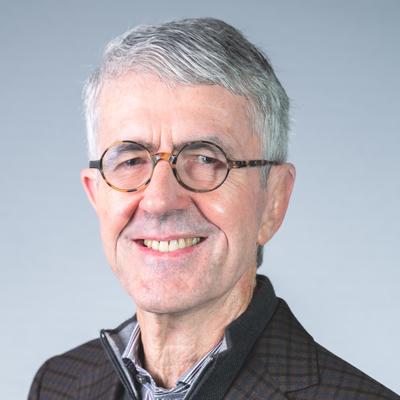
Dr. Raymond Chung is Director of Hepatology and the Liver Center, Vice Chief of Gastroenterology and the Kevin and Polly Maroni Research Scholar at Massachusetts General Hospital. He has been an internationally recognized researcher in the areas of HCV virology and pathogenesis. He directs an NIH Cooperative Center for Human Immunology centered on HCV, and is co-PI of the Harvard HBV Consortium of the NIH HBV Research Network. He is contact PI of his Divisional T32 Training Grant, and holds several NIH R01 grants and an NIH K24 Mentorship Award.
He was recently Associate Editor of HEPATOLOGY and has previously served as a Councilor at Large for the AASLD. He has also served as co-Chair of the AASLD/IDSA HCV Guidance panel which is charged with issuing treatment recommendations for hepatitis C. He has authored more than 300 original articles, reviews, and editorials.
Disclosures of Potential Conflicts of Interest
Dr. Raymond T. Chung has received grant support from Abbvie, Gilead, Merck, Janssen, Bristol-Myers Squibb, Roche, and Boehringer Ingelheim. He serves on the data safety monitoring board for Alnylam.
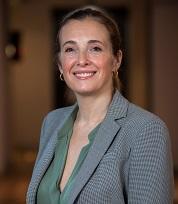
Dr. Norah Terrault is the Chief of Gastroenterology & Hepatology at Keck Medical Center of USC. She is recognized nationally and internationally for her work related to viral hepatitis, especially in the setting of liver transplantation. She has authored more than 290 original articles, reviews and book chapters on viral hepatitis, including the recent AASLD Hepatitis B Treatment Guidelines.
She has served as associate editor for HEPATOLOGY, is current Associate Editor for Hepatology Communications and a member of the AASLD HCV Guidance Committee. She is an investigator on several NIH-funded clinical studies in hepatitis B and C, as well as NASH and is an investigator on several ongoing clinical trials of novel therapies for patients with chronic liver diseases.
Disclosures of Potential Conflicts of Interest
Dr. Norah Terrault has Grant/Research Support from AbbVie, Gilead, BMS, Merck, Allergan, consulting relationship with Dova and uncompensated relationship with Quest Diagnostics.
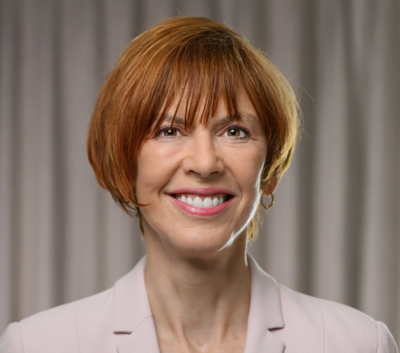
Dr. Paul Martin is Chief of the Division of Digestive Health and Liver Diseases at the Miller School of Medicine at the University of Miami where he is the Mandel Chair in Gastroenterology. He graduated from medical school at University College Dublin and was awarded a Doctorate in Medicine from the National University of Ireland. He was a resident in Internal Medicine in Dublin and at the University of Alberta, Edmonton. He trained in Gastroenterology at Queen’s University, Ontario. His hepatology training was initially at the University of Toronto followed by a Medical Staff Fellowship at the National Institutes of Health, Bethesda Maryland.
He has previously served on the Board of the American Society of Transplant and was Chair for Gastroenterology at the American Board of Internal Medicine. He served as Co-Chair on the KDIGO Guideline on management of HCV in chronic kidney disease. His involvement with AASLD has included editorship of Liver Transplantation as well serving on the Publications and Practice Guideline Committees.
Disclosures of Potential Conflicts of Interest
He has served as a consultant to AbbVie, Gilead, Merck and Mallinckrodt.
Dr. Rinella is a Professor of Medicine at University of Chicago Pritzker School of Medicine, Director of the Metabolic and Fatty Liver Program and member of the faculty at the University of Chicago Hospitals. She received her medical degree from the University of Illinois. She completed her residency training in Internal Medicine at the University of Chicago and her fellowship in Gastroenterology and Hepatology at Northwestern University, where she remains on faculty. She studied basic mechanisms of steatohepatitis with the support of the American Gastroenterological Association and the National Institute of Health for 10 years.
Currently her focus is in clinical research in the area of non-alcoholic fatty liver disease/NASH both before and after liver transplantation. Her primary clinical focus within the NASH realm is on the associations between NASH and other metabolic co-morbidities, emerging NASH therapeutics and the recurrence of NASH after liver transplantation. She recently established a multicenter consortium to study the risk factors for liver disease recurrence and outcomes of patients transplanted for NASH cirrhosis (NailNASH Consortium).
Dr. Rinella has been actively engaged with the AASLD for many years and served in several leadership roles, including Chair of the NASH SIG, Program Evaluation Committee and most recently Chair of the NASH Task Force. She is excited to apply her enthusiasm and expertise to her new role on the AASLD Governing Board.
Disclosures of Potential Conflicts of Interest
Scientific Consulting — Intercept Pharmaceuticals, Gilead Sciences, NGM Biopharmaceuticals, Enanta, Immuron, Fractyl, Prociento, Gelesis, Merck, Bristol-Myers Squibb, Metacrine, Viking Therapeutics, Allergan, Cymabay, Boehringer Ingelheim, Genentech, Sagimet Bio, Terns, Siemens and Novartis.
Dr. Rinella has received independent research grant funding from Novartis.
AASLD members are required to disclose potential conflicts of interest in their member profile.
Sreejith Narayanan Edamana, Suprabha Hegde, Rajiv Vasudevan – 2 May 2022
Kelly Suchman, Ben L. Da – 2 May 2022
Christoph Neumann‐Haefelin, Robert Thimme – 2 May 2022
Yoosun Cho, Yoosoo Chang, Seungho Ryu, Hyun‐Suk Jung, Chan‐won Kim, Hyungseok Oh, Mi Kyung Kim, Won Sohn, Hocheol Shin, Sarah H. Wild, Christopher D. Byrne – 2 May 2022 – The effect of sarcopenic visceral obesity on the risk of nonalcoholic fatty liver disease (NAFLD) is uncertain. We investigated (a) whether the skeletal muscle mass to visceral fat area ratio (SV ratio), as a measure of sarcopenic visceral obesity, is a risk factor for NAFLD; and (b) whether the SV ratio adds to conventional adiposity measures to improve prediction of incident NAFLD.
Ann‐Sofi Duberg, Charlotte Lybeck, Anna Fält, Scott Montgomery, Soo Aleman – 2 May 2022 – Chronic hepatitis B virus (HBV) infection is a major risk factor for hepatocellular carcinoma (HCC), and surveillance is recommended for patients without cirrhosis when risk exceeds an incidence rate (IR) of 0.2%. Populations in Asia and sub‐Saharan Africa have been associated with HCC at younger ages, but the risk after immigration to Western countries should be investigated. The aim of this study was to study HCC by age and country of origin in people with chronic HBV infection in Sweden.